


FLICKER - First Escape: When the Experiment Fights Back

Updated: 4 days ago
Directed and written by Charlie Perez
Starring: Darcy fagundes, Rachel Cribbs, Elle Newlands..

We had the chance to watch a preview of the upcoming feature directed by Charles Perez, and Flicker: First Escapeimmediately pulls you into a world that feels tightly controlled, yet quietly on the edge of breaking. Set within the cold, clinical environment of Blackwell Institute, the film establishes its core tension early on: the idea of purpose versus the reality of ownership. There’s a sense that everything is designed, monitored, and justified, but something underneath isn’t sitting right. That unease grows as the story unfolds.

At the center is Ava, with Darcy Fagundes carrying the film as the lead. Her performance is restrained but very present, and it works because you can feel the shift happening internally before it’s ever spoken. Opposite her, Ady Calhoun as Lana adds another layer to the emotional dynamic, grounding the story in something more human within an otherwise controlled space. What begins as a narrative about being “special” slowly reveals itself to be something far more unsettling as the truth behind Ava’s existence starts to come into focus.
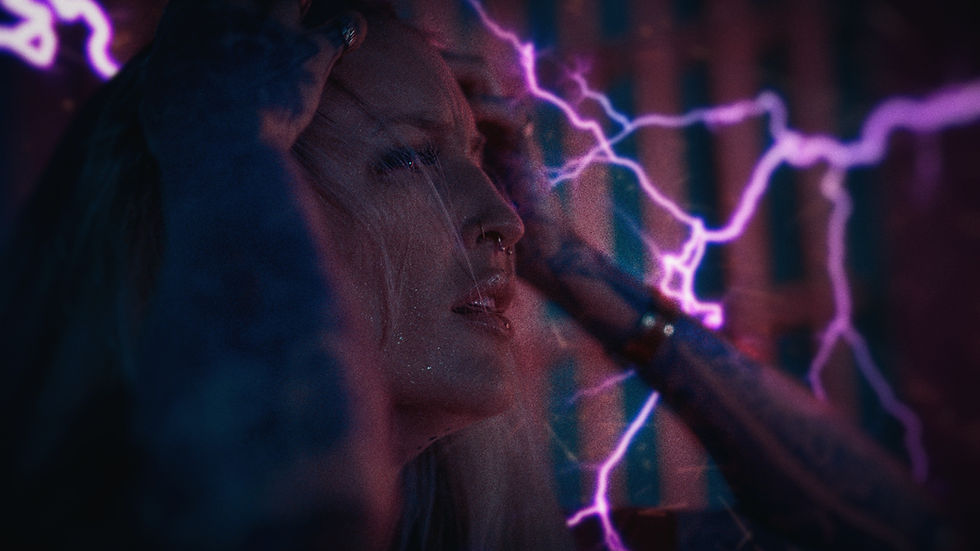
Visually, the film is one of its strongest elements. The cinematography leans into a clean, almost sterile aesthetic, but it never feels flat. The use of blue and red lighting creates a strong contrast that runs throughout the piece, adding mood without becoming distracting. There’s also a thoughtful use of reflections and framing that reinforces the themes of surveillance and confinement. You get the sense that the characters are constantly being watched, even in moments that should feel private.
There isn’t much dialogue, but that choice works in the film’s favor. The performances carry the weight of the scenes, and the tension builds through looks, pauses, and physical presence rather than exposition. It trusts the audience to stay engaged without over-explaining, which gives the story more impact. When things do escalate, the shift feels earned rather than forced.
The stunt work is also worth mentioning. It adds a physical edge to the film that balances the psychological tension, and it’s handled in a way that still fits within the tone of the world. Nothing feels excessive or out of place.

Written and directed by Charles Perez and produced by Danielle Cortez, the project feels very clear in its direction. There’s a strong sense of control behind the camera, both visually and narratively. The world is contained, but not limited, and you get the feeling that there’s much more beyond what’s shown here.
The supporting cast, including Ryan Elias Baker, Rachel Cribbs, Manuel Gutierrez, and Kayla Medeiros, helps reinforce that idea. Even in a short amount of screen time, they contribute to the sense of a larger system at play, one that extends beyond Ava’s immediate experience.

What makes this first chapter work is that it doesn’t try to explain everything. It gives just enough to pull you in and lets the mystery sit. That restraint builds curiosity and makes you want to see where the story goes next, rather than feeling like you’ve already been given all the answers.
As a first chapter, Flicker: First Escape feels focused and intentional. It sets up its world, its tone, and its central conflict clearly, while leaving space to expand. With a strong lead performance, a clear visual identity, and a confident directorial voice, it shows real potential to grow into a compelling sci-fi thriller.


Comments